
“What actually happens on the grounds of ’t Kasteelke when it gets dark?”
Anyone walking through the grounds of ’t Kasteelke during the day will see plenty of life. Birds in the trees, insects in the grass, and perhaps a squirrel or other small animal quickly seeking a safe haven. But even after dark, it remains surprisingly bustling, as it turns out.
Recently, a local entomologist surveyed the insects found on and around our property. A special light trap was set up for this purpose. Moths are attracted to the light, allowing them to be observed briefly. The next morning, the moths were carefully identified and, of course, released back into the wild.
A Surprising Catch
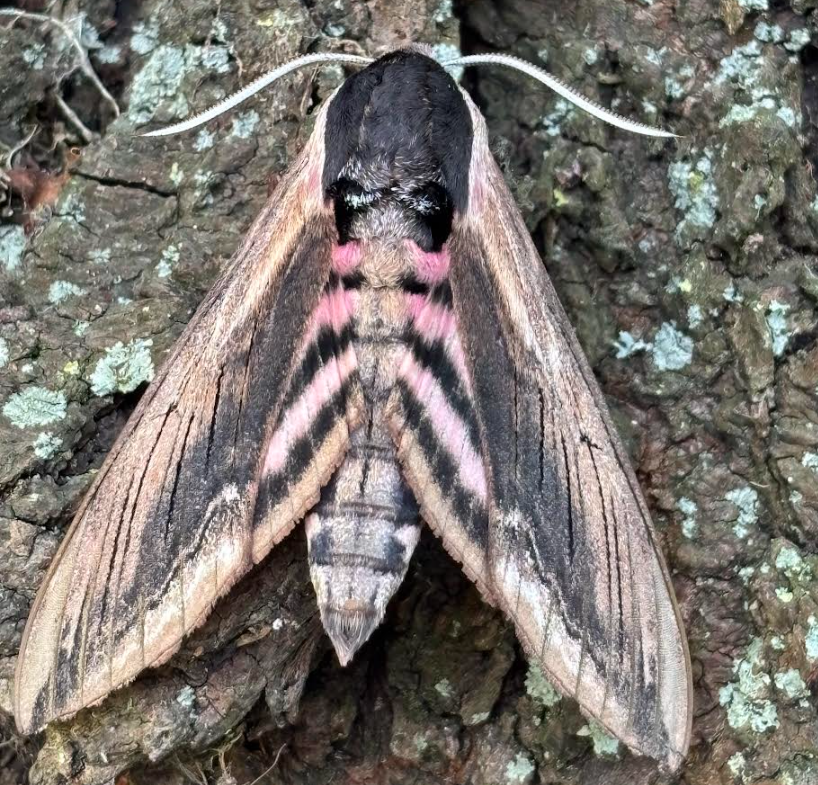
After just one night, it became clear just how many different species are hiding around ’t Kasteelke. Among the sightings was even a mayfly that’s rare in the Netherlands: the Ringed Three-tailed Mayfly. A beautiful and unexpected discovery, demonstrating that a historic estate can be valuable not only for its cultural and historical significance but also as an important habitat for plants and animals. A large Privet Skimmer had also flown into the trap (see the photo below).
Young owls on the grounds
Our owl boxes are also being put to good use. There are three owl boxes on the grounds, and this year no fewer than ten young owls were raised in them: five barn owls and five little owls.
Yards with old buildings, meadows, trees, and plenty of insects are particularly attractive to little owls. Barn owls find suitable nesting sites in barns, cupboards, and quiet buildings. From the yard, both species can hunt for mice, insects, and other food.
It’s always amazing to think that these animals fly around here at night, often without our guests—or even us—noticing much of it.
In addition to trying to preserve the cultural and historical value, we believe it is just as important to let nature take its course. Old trees, quiet corners, grasslands, nesting boxes, and the mix of buildings and green spaces provide habitats for many different animals. It all seems to work well together, because we’ve learned that doing less for nature is often better.